
Have you ever experienced confusion when deciding between ‘should‘ and ‘would‘ in a sentence? Don’t worry; you’re not alone! These two words are frequently confused, but they possess distinct definitions and applications.
This blog will delve into the specific guidelines for using ‘should‘ and ‘would‘ correctly.
First, let’s talk about what ‘should‘ and ‘would‘ are. These words are called modal verbs. Modal verbs help us express things like possibilities, obligations, or requests. ‘Should‘ and ‘would‘ are two of the most common modal verbs, but they can be tricky to use.
‘Should’ is the past tense of ‘shall,’ and ‘would’ is the past tense of ‘will.’ So, the rules for using ‘should’ and ‘would’ are similar to those for ‘shall’ and ‘will.’ However, there are many differences, especially when used in sentences with extra parts called subordinate clauses.
Using Should
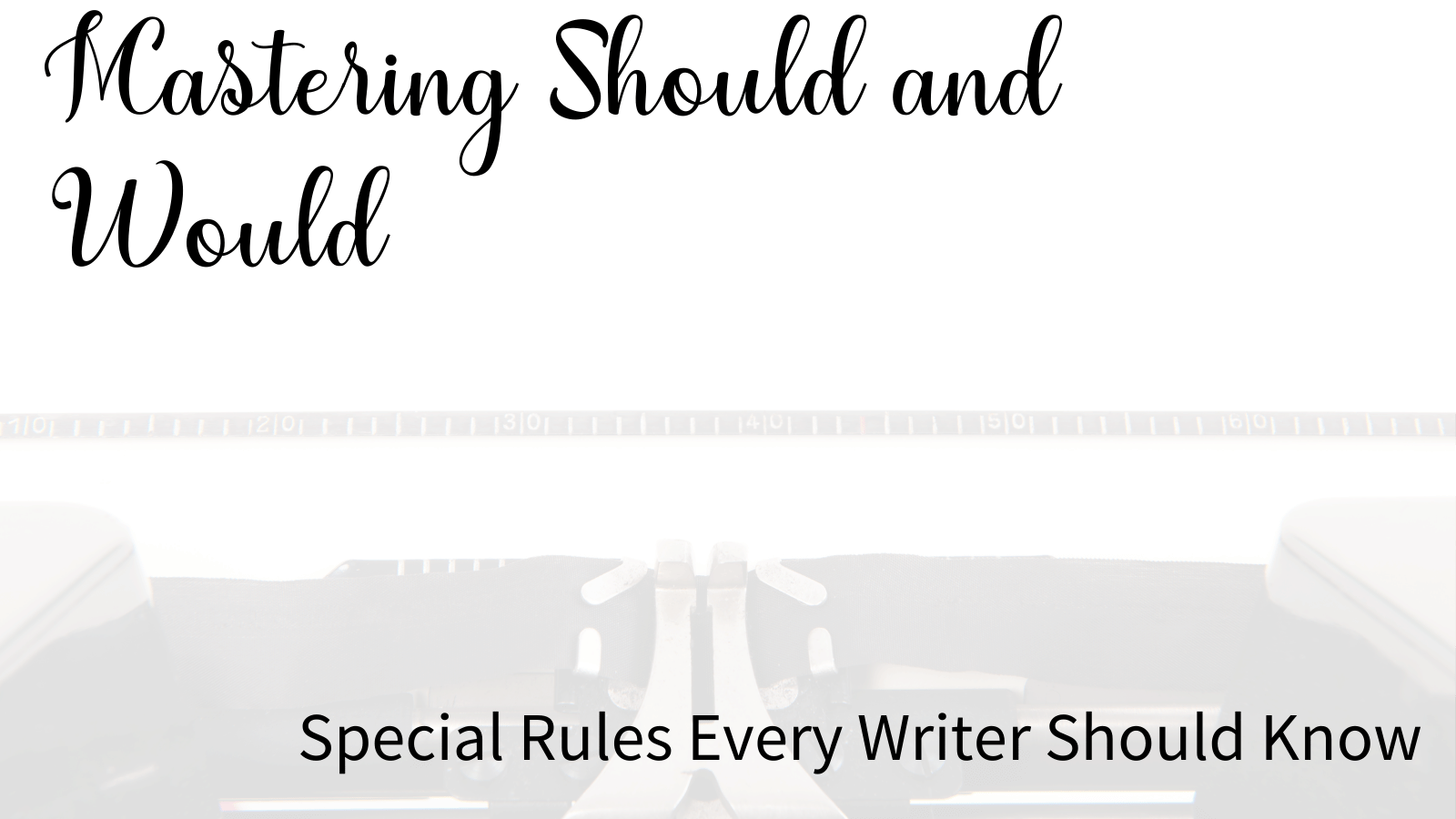
What are the rules of using should.
Rule 1: Expressing Obligation or Duty
When we use ‘should,’ we’re often talking about something that is the right thing to do. It’s like giving someone advice about what they ought to do.
♦ Example: You should call your grandmother.
This sentence means that it’s the right thing to do, or it’s a good idea to call your grandmother.
Rule 2: Giving Advice
‘Should‘ is also used to suggest something that would be good for someone to do.
♦ Example: You should study for the test.
Here, you’re advising someone to study because it’s a good idea.
Rule 3: Expressing Expectation or Probability
Sometimes, ‘should‘ is used to talk about something that we expect to happen.
♦ Example: The bus should arrive at 9 AM.
This means that it’s expected that the bus will arrive at 9 AM.
Be careful not to mix up ‘should’ with other words in conditional sentences. For example, don’t say, ‘If I would study, I should pass,’ when you mean, ‘If I study, I should pass
Using Would
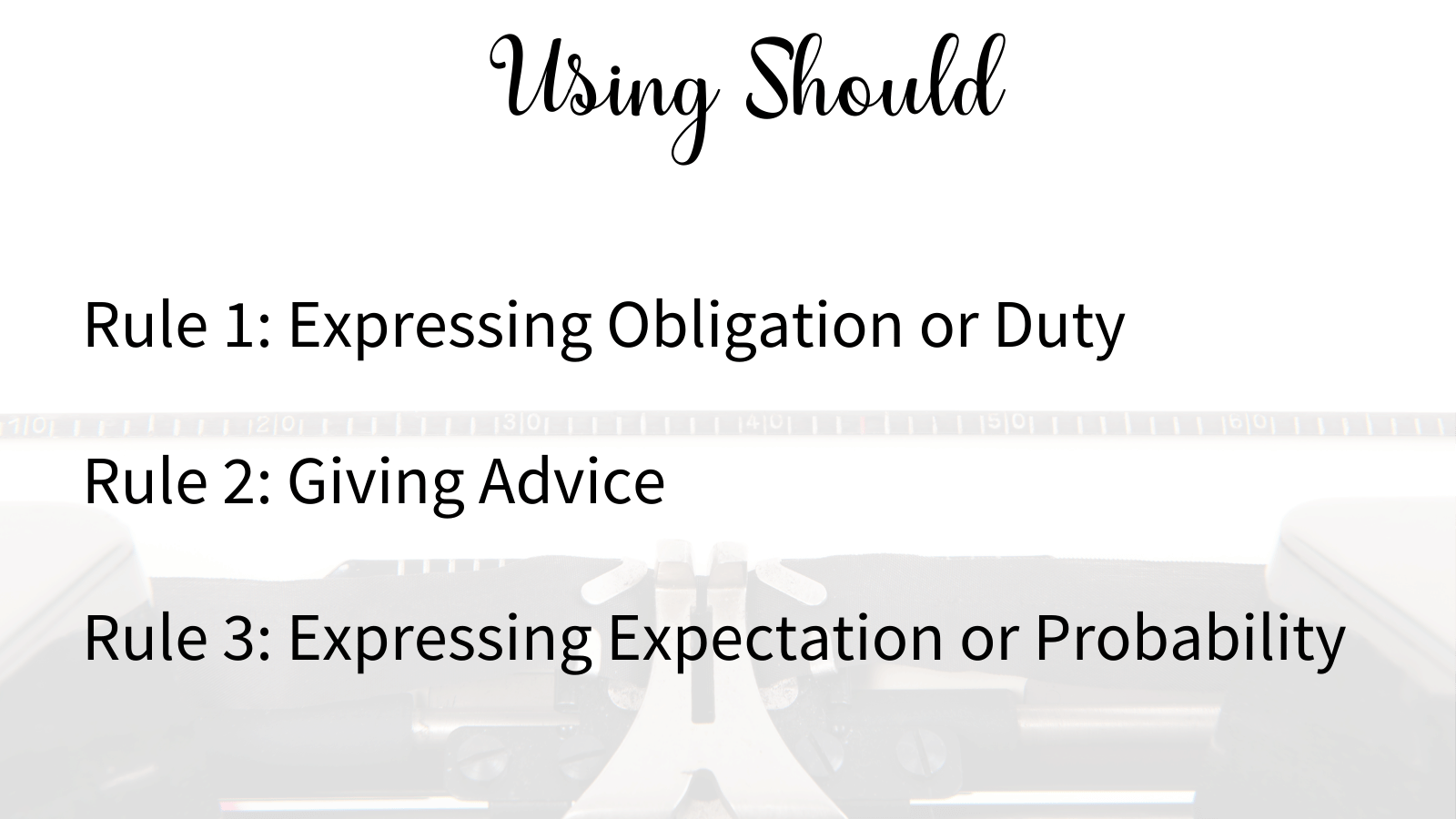
What are the rules of using would.
Rule 1: Expressing Willingness or Preference
‘Would‘ is often used to talk about what someone wants or prefers to do.
♦ Example: I would like some ice cream.
This sentence shows the speaker wants ice cream.
Rule 2: Talking About Hypothetical Situations
‘Would‘ is also used to describe things that could happen, but only if something else happens first. This is common in sentences that start with ‘if.’
♦ Example: If I had more time, I would read more books.
This means the person would read more if they had extra time, but they don’t.
Rule 3: Describing Past Habits
‘Would‘ can be used to talk about things someone did regularly in the past.
♦ Example: When I was younger, I would ride my bike every day.
This means that riding a bike was a regular activity in the past.
Don’t confuse ‘would‘ with ‘will‘ when talking about the future. For example, don’t say, ‘I would go to the party tomorrow,’ when you mean, ‘I will go to the party tomorrow.’
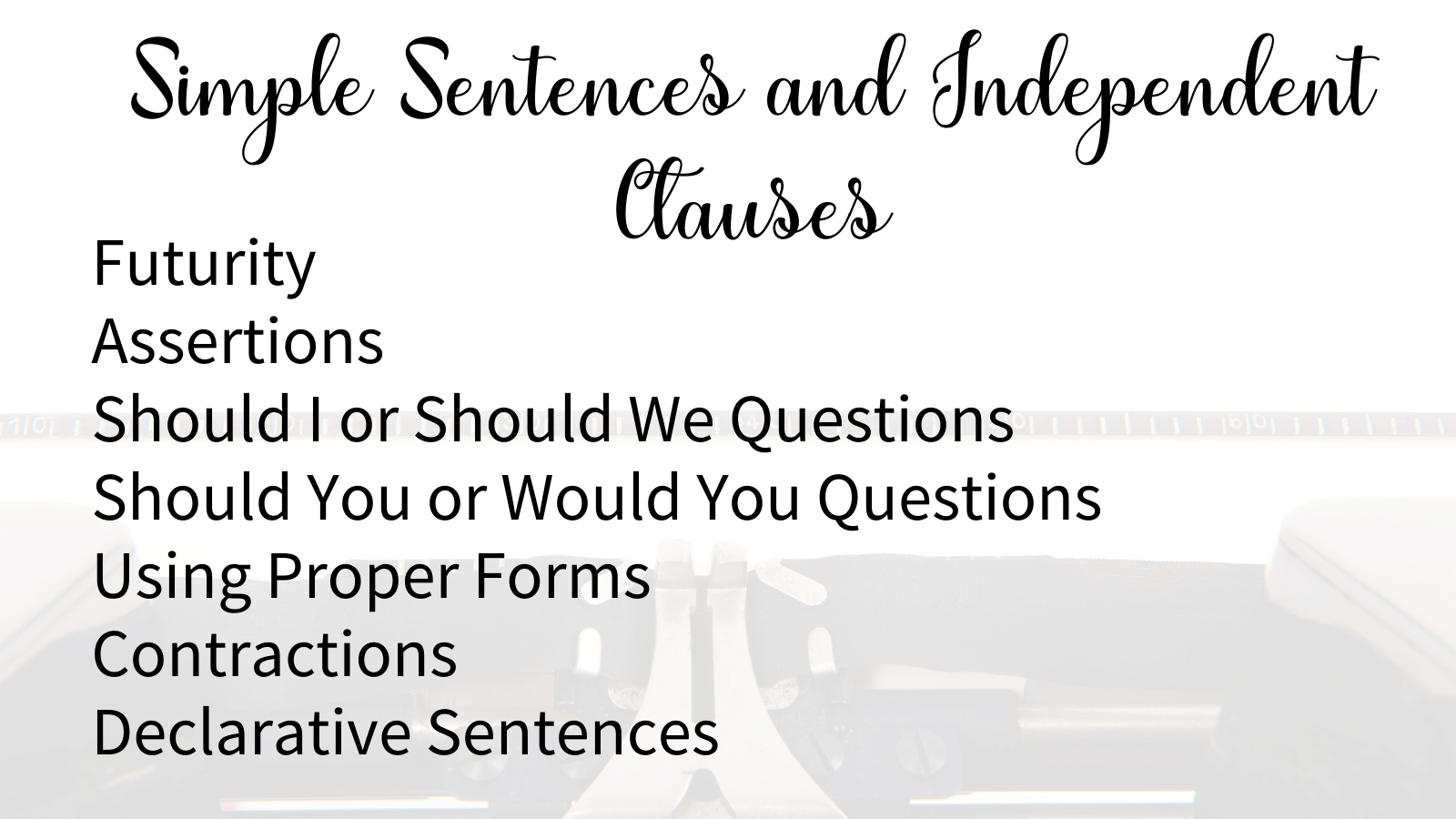
In Simple Sentences and Independent Clauses
In simple sentences and independent clauses, the difference between ‘should’ and ‘would’ is almost the same as the difference between ‘shall’ and ‘will,’ except in certain types of subordinate clauses.
Futurity
When we talk about the future without adding any feelings like wishing or agreeing, the forms look like this:
For Statements (Declarative):
| Singular | Plural |
| 1st person: I should fall. | 1st person: We should fall |
| 2nd person: You would fall. | 2nd person: You would fall. |
| 3rd person: He/She/It would fall. | 3rd person: They would fall. |
For Questions (Interrogative):
| Singular | Plural |
| 1st person: Should I fall? | 1st person: Should we fall? |
| 2nd person: Should you fall? | 2nd person: Should you fall? |
| 3rd person: HWould he/she/it fall. | 3rd person: Should theyfall? |
Assertions
Common errors are the use of ‘I would’ for ‘I should’ in assertions, and that of ‘Would I?’ and ‘Would you?’ for ‘Should I?’ and ‘Should you?’ in questions. Here are some examples of how to use ‘I should’ or ‘I would’ in sentences:
Examples:
-
- I should break my neck if I fell.
- I should hesitate to try this experiment.
- I shouldn’t be surprised if he escaped.
- We should regret any misunderstanding.
- I should want to examine the plans again before deciding.
- I should be happy to accept any fair offer.
- I would pay five dollars for a ticket.
- I would help you if I could.
- I would never agree to that proposal.
- We would rather die than surrender.
- We would pay our bill today if we had the money.
- I would gladly accept any fair offer.
In the first six examples, ‘I should‘ or ‘we should‘ is correct because it doesn’t show what the speaker wants or wishes to do. It simply talks about what might happen or what is appropriate.
In the last six examples, we use ‘I would‘ or ‘we would‘ because the speaker’s willingness, desire, or intention is clear. It shows what the speaker wants or is willing to do.
Should I or Should We Questions
How do you know when to use ‘Should I’ or ‘Should we’ in Questions. Here are some examples
Examples:
-
- Should I snap my neck if I fall?
- Should I get poisoned if I ate those berries?
- Should I catch a cold without my coat?
- Should I disturb you if I practiced the piano?
- Should we run aground if we missed the channel?
‘Would I?’ is mostly used in questions when you’re repeating what someone else said in casual conversation. For example:
♦ Example: Someone says, ‘You would pay five dollars for a ticket.’ You reply, ‘Would I? No, I wouldn’t!’
Related Reading: Exploring Adverbs: Types, Examples, and Uses
Should You or Would You Questions
Here are some examples of how to use ‘Should you?’ and ‘Would you?’ in questions:
Examples:
- Should you drown if the boat capsized? (Yes, I should drown because I don’t know how to swim).
- Should you give up if this plan failed? (No, I shouldn’t give up because I have other options).
- Should you think that ten yards of velvet would be enough? (Yes, I should think so).
- Should you be upset if I spoke honestly? (No, I shouldn’t be upset).
- Should you want to check the plans again before deciding? (Yes, I should).
- Would you wear a hat or a cap? (I would wear a cap if I were you).
- Would you study Greek if you were in my place? (Yes, I would).
- Would you accept my apology if I offered it? (Of course, I would accept it gladly).
- Would you be kind enough to lend me your compass? (Certainly, I would lend it if I hadn’t lost it).
- Would you allow me to use your name as a reference? (Yes, I would).
The choice between ‘should‘ and ‘would‘ in these questions depends on what you expect the answer to be. If the answer is more about what’s likely or what’s the right thing to do, use ‘should.’ If the answer is about what someone will do or prefers, use ‘would‘.
The chief occasions where using Would you? is correct are:—(1) in asking advice in a matter of doubt, and (2) in asking consent or permission.
Using the examples above in 6 and 7, the speaker asks for advice, while in 8, 9, and 10, the speaker asks consent or permission.
Using Proper Forms
Remember to use the proper forms: ‘I should like,’ ‘Should I like?’ and ‘Should you like?’
Examples:
♦ I should read that book.
♦ Should I like to go to Rome? (Yes, I should).
♦ Should you like to receive a copy of our catalog? (I should like to receive one).
Many people, even well-known writers, often use ‘would‘ in these phrases, like ‘I would like,’ but ‘should‘ is actually the correct word to use. The reason is the same as why we say ‘I should wish.’
Contractions
‘I’d‘ and ‘we’d‘ are short for ‘I would‘ and ‘we would.’ You can’t use them for ‘I should‘ and ‘we should.’
♦ Example: I would gaze at the sea for hours at a time.
♦ Example:Whenever we asked Aram about his adventures, he would start talking about something else.
Related Reading: Unlocking the Power of Nouns in Writing
Declarative Sentences
When using ‘should’ in simple sentences and independent clauses, it can express what the speaker wants to happen:
Examples:
♦ If I had my way, you should be prosecuted. (This means: ‘I would make sure you were prosecuted).
♦ If I had the money, you should be paid immediately. (Compare this with: ‘You shall be paid).
♦ If I were you, she should not regret her generosity. (Compare this with: ‘She shall not regret it).
These examples show how ‘should‘ is used to express what the speaker wants to happen, similar to using ‘would‘ or ‘shall‘ but with a slightly different meaning.
Subordinate Clauses
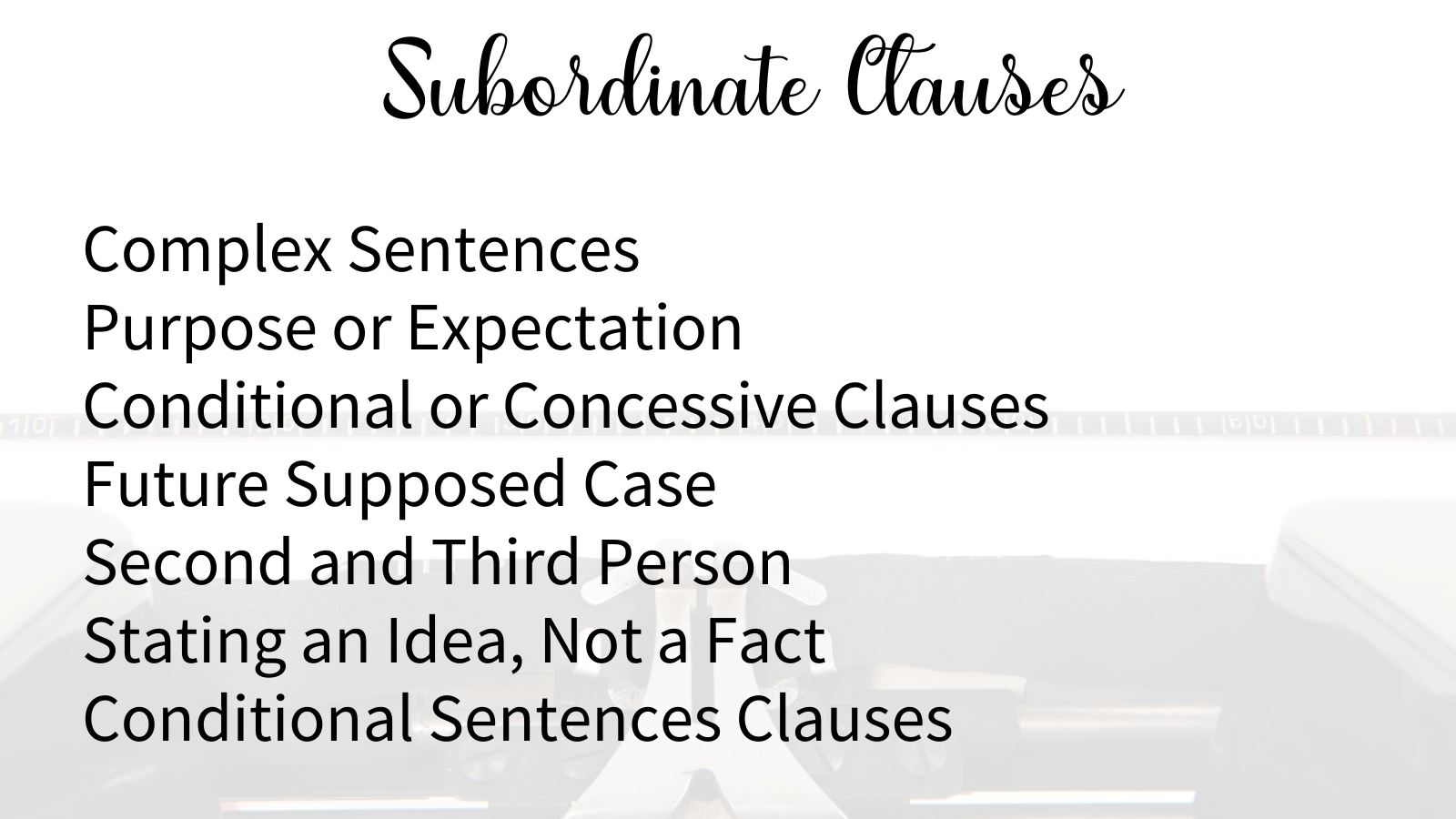
Sometimes, the way we use ‘should‘ and ‘would‘ is different in subordinate clauses.
Complex Sentences
When we use ‘should‘ and ‘would‘ in complex sentences, especially in certain kinds of subordinate clauses, the rules differ from those in simple sentences. Here are five types of clauses where you need to pay attention:
♦ Clauses of Purpose or Expectation: These clauses explain why something is done or what is expected to happen.
♦ Conditional and Concessive Clauses: These clauses talk about conditions or make concessions (like ‘if’ or ‘even though’ statements).
♦ Clauses Expressing Someone Else’s Will: These clauses show what someone else wants or intends, not the subject of the sentence.
♦ Clauses Stating an Idea: These clauses present something as an idea or thought.
♦ Indirect Discourse: These clauses report what someone else has said or thought.
Purpose or Expectation
When you’re talking about the purpose of an action or what you expect to happen, you use ‘shall‘ or ‘should‘ for all three persons (I, you, they).
Examples:
♦ Charleton took great pains that I/you/they should understand the details of the treaty.
♦ Scott is/was very careful that nothing shall/should interfere with his plans.
♦ They took every precaution lest I/you/he should suspect the plot.
♦ Anderson waited patiently until I/you/they should arrive with the horses.
♦ We strained every nerve to reach the cave before the storm should break.
In these examples, ‘should‘ is used to express what someone wanted to happen or expected to happen in different situations. This differs from how we use ‘should‘ in simple sentences.
Conditional or Concessive Clauses
When we talk about something that might happen in the future, we use ‘will‘ or ‘should‘ in all cases (I, you, he/she/they) if we’re not sure it will happen. But if the person wants or agrees to do something, we use ‘will‘ or ‘would‘ instead.
Examples:
♦ What would happen if I/you/he should not follow the commander’s instructions? (This is asking about a doubtful future situation).
♦ If I/you/he should miss the boat, our friends would be worried. (This suggests what might happen if someone misses the boat).
♦ Whoever shall/should break this law shall/should pay the penalty. (This means if anyone breaks the law, they will be punished).
♦ Whenever I/you/he shall find a chance, let’s try the experiment. (This suggests that when someone finds an opportunity, they should try something).
♦ He promised to help you whenever you should need it. (This means if you ever need help, he will assist you).
♦ Though we/you/they should fail, others would still try. (Even if we/you/they fail, someone else will keep trying).
♦ Though Evans should disappoint me, I would not lose faith in him. (Even if Evans lets me down, I will still trust him).
♦ Vernon will do his part if I/you/they will cooperate with him. (Vernon is willing to work if others agree to help).
♦ If I/you/he will just make an effort, success is guaranteed. (This means that trying hard will lead to success).
♦ Edmund would reveal the secret if I/you/they would help him search for the treasure. (Edmund will share the secret if others help him).
♦ If we would take care, our parents would be pleased. (If we try hard, our parents will be happy).
♦ Whoever will join us can expect a fun and rewarding journey. (If anyone joins, they will have a good time).
Related Reading: Understanding Compound Personal Pronouns
Future Supposed Case
When something’s going to happen in the future, you can use ‘will‘ for you, he/she/they to show it’s just for the future.
♦ Example: Though you/he will likely fail, you/he can still try. (Even if you/he will fail, it’s okay to try).
♦ Example: Though the ship will not sink for some hours, let’s get into the boats. (Even though the ship won’t sink right away, it’s safer to leave now).
Second and Third Person
Sometimes,we use ‘will‘ and ‘should‘ in sentences to show what someone else wants, not the person who is the subject of the sentence.
Examples:
♦ Robbie insists that you go with him. (This means Robbie wants you to go with him).
♦ This letter tells you where you shall position yourself. (This means the letter says where you need to be).
♦ We gave orders that the gates should be closed. (This means someone ordered that the gates must be closed).
♦ My wish is that you/he should stay at home. (This means I want you or him to stay at home).
♦ The law states when and to whom the tax should be paid. (This means the law explains who needs to pay the tax and when).
In these examples, ‘shall‘ and ‘should‘ show what someone else is deciding or wanting, not what the subject of the sentence wants.
Stating an Idea, Not a Fact
When a sentence with ‘that‘ is talking about something as an idea or something to think about, rather than a fact, ‘should‘ is the correct word to use for all three persons (I, you, he/she/they).
Examples:
♦ I am not surprised that you should find your lesson difficult. (This means, When I think about it, it makes sense that you find the lesson hard.
Contrast: I am not surprised that you find the lesson difficult. (This states it as a fact.)
♦ It is strange that Avi should miss his swimming lessons. (This means, It seems odd to think that Avi would miss his lessons).
Contrast: ‘It is strange that Tom neglects his lessons.’ (This states it as a fact.)
♦ That Napoleon should have been frustrated with his captivity is only natural. (When you think about it, it’s understandable that Napoleon was frustrated).
Contrast: That Napoleon was frustrated. (This states it as a fact.)
In these examples, using ‘should‘ helps to express that we’re considering an idea or possibility, not stating something as a definite fact.
In Conditional Sentences Clauses
Conditional sentences often use both ‘should‘ and ‘would,’ but they change the meaning of the sentence.
Conditional Type 1 (Real Possibility)
♥ If you study hard, you should pass the exam. (This means that studying hard is expected to help you pass).
Conditional Type 2 (Unreal or Hypothetical Situation)
♥ If I had more money, I would buy a new bike. (This means that if you had more money (but you don’t), you would buy a new bike).
Special Cases and Advanced Uses
There are also rules for formal writing and expressing politeness.
Formal Writing
In formal writing, ‘should‘ and ‘would‘ are often used to sound more polite or to make suggestions softer.
♦ Example: I would suggest that we leave early. (This is a polite way of suggesting leaving early).
♦ Example: You should consider all options before deciding. (This is a polite way of advising someone to think carefully).
Expressing Politeness
Sometimes, we use ‘should‘ and ‘would‘ to be polite or to soften what we’re saying.
♦ Example: I would recommend the pasta. (This sounds more polite than just saying, Get the pasta).
♦ Example: You should try this new book. (This is a friendly suggestion, not an order).
Related Reading: Understanding Verbs: The Action Words of Language
Practice Exercises
In the following sentences, choose between would and should.
- (Would/Should) you help me if I asked for your assistance?
- I (would/should) like to attend the event if I have time.
- If I were you, I (would/should) apologize immediately.
- You (would/should) take an umbrella; it looks like rain.
- He (would/should) be upset if he knew what happened.
- I (would/should) prefer tea over coffee.
- If you study hard, you (would/should) pass the exam.
- She (would/should) be glad to hear from you.
- We (would/should) go on a vacation if we had enough money.
- You (would/should) see a doctor if your symptoms persist.
- They (would/should) have been on time if they had left earlier.
- I (would/should) recommend this book to anyone interested in history.
- If he trained more, he (would/should) become a better athlete.
- You (would/should) have called me if you were in trouble.
- She (would/should) eat healthier to maintain her energy levels.
- (Would/Should) you agree to the terms if they were fair?
- I (would/should) be grateful if you could send the report by tomorrow.
- If I had known, I (would/should) have done things differently.
- You (would/should) complete the assignment before the deadline.
- If we hurry, we (would/should) catch the train on time.
Click on the + button for the answers
- Would you help me if I asked for your assistance?
- I would like to attend the event if I have time.
- If I were you, I would apologize immediately.
- You should take an umbrella; it looks like rain.
- He would be upset if he knew what happened.
- I would prefer tea over coffee.
- If you study hard, you should pass the exam.
- She would be glad to hear from you.
- We would go on a vacation if we had enough money.
- You should see a doctor if your symptoms persist.
- They would have been on time if they had left earlier.
- I would recommend this book to anyone interested in history.
- If he trained more, he would become a better athlete.
- You should have called me if you were in trouble.
- She should eat healthier to maintain her energy levels.
- Would you agree to the terms if they were fair?
- I would be grateful if you could send the report by tomorrow.
- If I had known, I would have done things differently.
- You should complete the assignment before the deadline.
- If we hurry, we should catch the train on time.
Key Takeaways
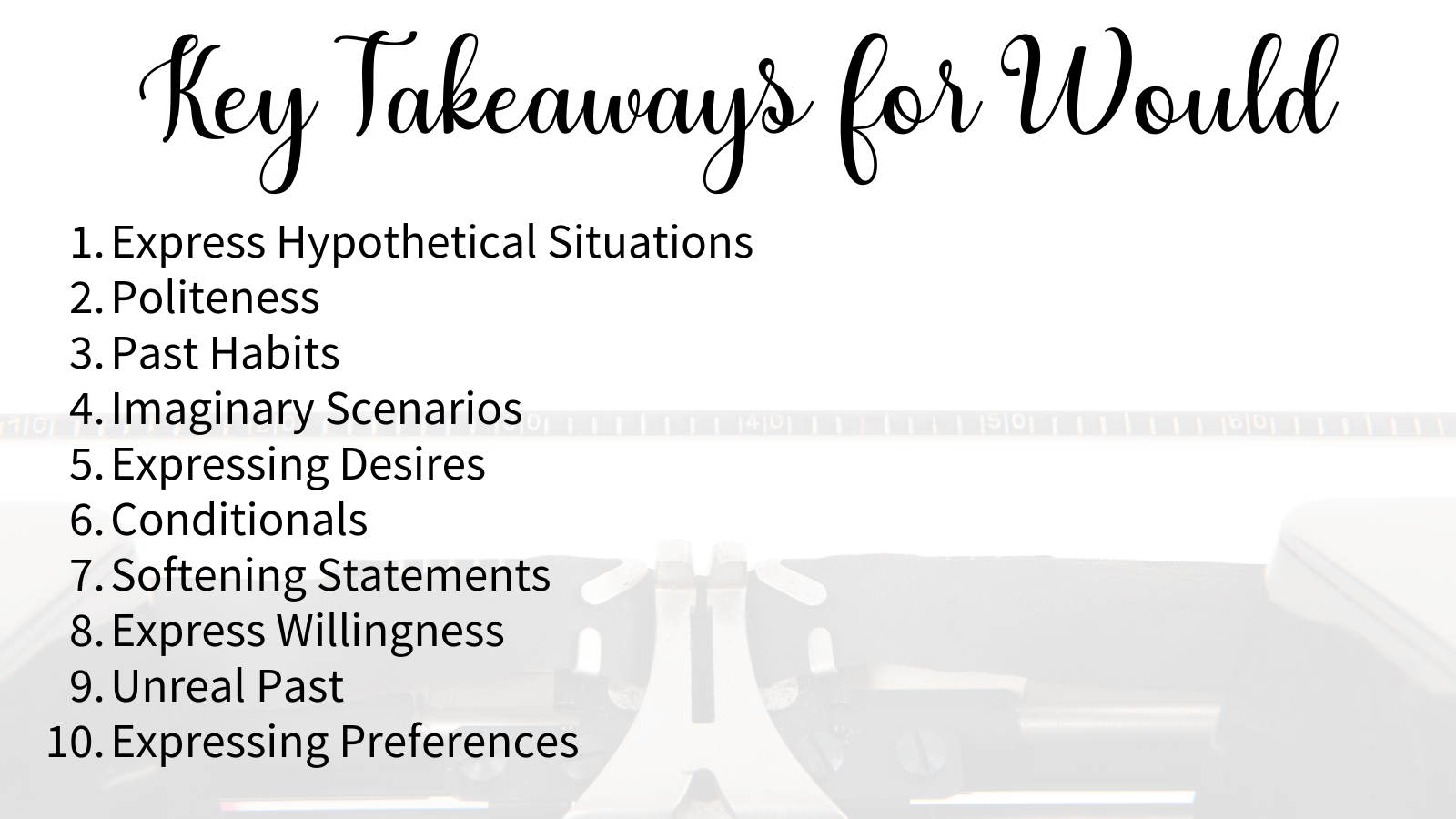
Tips for Using Would
1. Express Hypothetical Situations: Use ‘would’ to talk about something that could happen if a certain condition is met.
2. Politeness: Use ‘would’ to make polite requests or offers.
3. Past Habits: Use ‘would’ to describe actions that were regularly done in the past.
4. Imaginary Scenarios: Use ‘would’ when discussing something imaginary or unlikely.
5. Expressing Desires: Use ‘would’ to express something you want or prefer.
6. Conditionals: Use ‘would’ in the main clause of second and third conditional sentences.
7. Softening Statements: Use ‘would’ to soften your statements, making them less direct.
8. Express Willingness: Use ‘would’ to show willingness or intention.
9. Unreal Past: Use ‘would have’ to talk about something that didn’t happen but could have.
10. Expressing Preferences: Use ‘would rather’ to express a preference.
Tips for Using ‘Should’
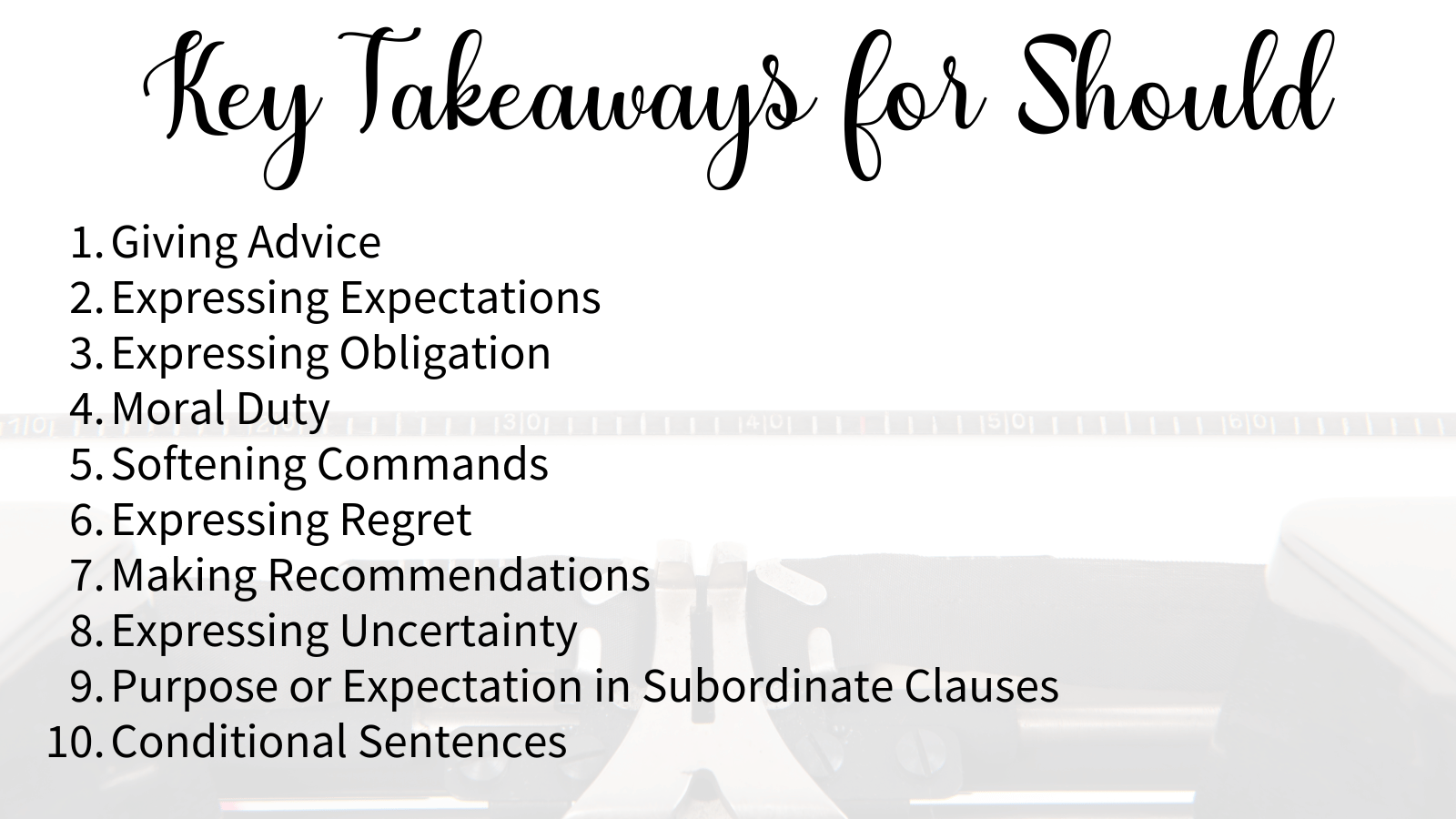
1. Giving Advice: Use ‘should’ to give advice or suggest what someone ought to do.
2. Expressing Expectations: Use ‘should’ to express what is expected or likely to happen.
3. Expressing Obligation: Use ‘should’ to indicate something that is the right thing to do.
4. Moral Duty: Use ‘should’ to express a moral duty or responsibility.
5. Softening Commands: Use ‘should’ to soften commands, making them sound less forceful.
6. Expressing Regret: Use ‘should have’ to talk about something you regret not doing in the past.
7. Making Recommendations: Use ‘should’ when recommending something.
8. Expressing Uncertainty: Use ‘should’ in questions to express uncertainty or to seek advice.
9. Purpose or Expectation in Subordinate Clauses: Use ‘should’ in subordinate clauses to express purpose or expectation.
10. Conditional Sentences: Use ‘should’ in the ‘if’ clause of some conditional sentences to express possibility.
Last Words on Should and Would
Should and would are useful terms that enable us to provide advice, discuss potential scenarios, and maintain a courteous tone. Have you ever experienced confusion when deciding between ‘should’ and ‘would’ in a sentence?
Happy writing!
Linda
Liked this post? Pin this image! It’s a huge help for my blog. Thank you!
Feature Image by Gerd Altmann from Pixabay.


0 Comments