

Have you ever written a character who pushes away the person they love, refuses help they clearly need, or turns a small disagreement into a much bigger fight?
On the surface, their behaviour might seem unreasonable.
But once you look at what they’ve lived through, their choices can start to make sense.
♥ Maybe someone once used their honesty against them.
♥ Maybe asking for help led to embarrassment.
♥ Maybe the last person who promised to stay walked away.
Those experiences can leave emotional wounds, and those wounds can shape the way a character sees themselves, other people, and the world around them.
For writers, this is where backstory becomes useful because the past starts affecting what the character does now.
An emotional wound is a painful experience, or pattern of experiences, that still has an effect on your character.
It might come from betrayal, rejection, loss, failure, abandonment, humiliation, or guilt.
It might also grow from things they heard over and over:
♥ Stop being difficult.
♥ Your sister does it better.
♥ Nobody wants to hear your opinion.
The experience matters.
But so does the meaning your character gives it.
Two characters can go through something similar and come away with completely different beliefs.
Maybe they both lose a close friendship.
One decides: You can’t trust anyone.
The other decides: If I keep everyone happy, nobody will leave.
Same kind of hurt but very different person.
And the wound doesn’t have to come from a huge tragedy. A parent who constantly dismisses what a child loves can leave them feeling embarrassed by their interests.
Years of small put-downs can teach someone to hide every mistake.
So when you’re building a wound, start with this: What happened, and what did my character decide it meant about them?
Emotional Wounds and Backstory
Backstory matters most when it changes the story happening now.
A character who fears abandonment may end a relationship before their partner gets the chance to leave.
Someone who grew up under constant criticism might hide a mistake until it becomes much worse.
A character who once failed someone they loved may try to control every detail of a dangerous situation because they can’t stand the thought of failing again.
That’s where the wound starts creating conflict.
♥ The character wants something, but the way they protect themselves makes it harder to get.
♥ They want closeness, but keep secrets.
♥ They want respect, but won’t admit when they don’t know something.
♥ They want safety, but push away the people who could help them.
Now you’ve got more than a list of personality traits.
You’ve got a reason behind the behavior.
Readers don’t have to agree with every choice your character makes, they just need enough information to understand why this particular person would make it.

A Simple Emotional-Wound Framework
You don’t need a twenty-page psychological profile to build an emotional wound.
A few connected pieces can give you plenty to work with.
For this example, we’ll use an invented character named Mara, who has to work with a team to guide people out of a flooded town.
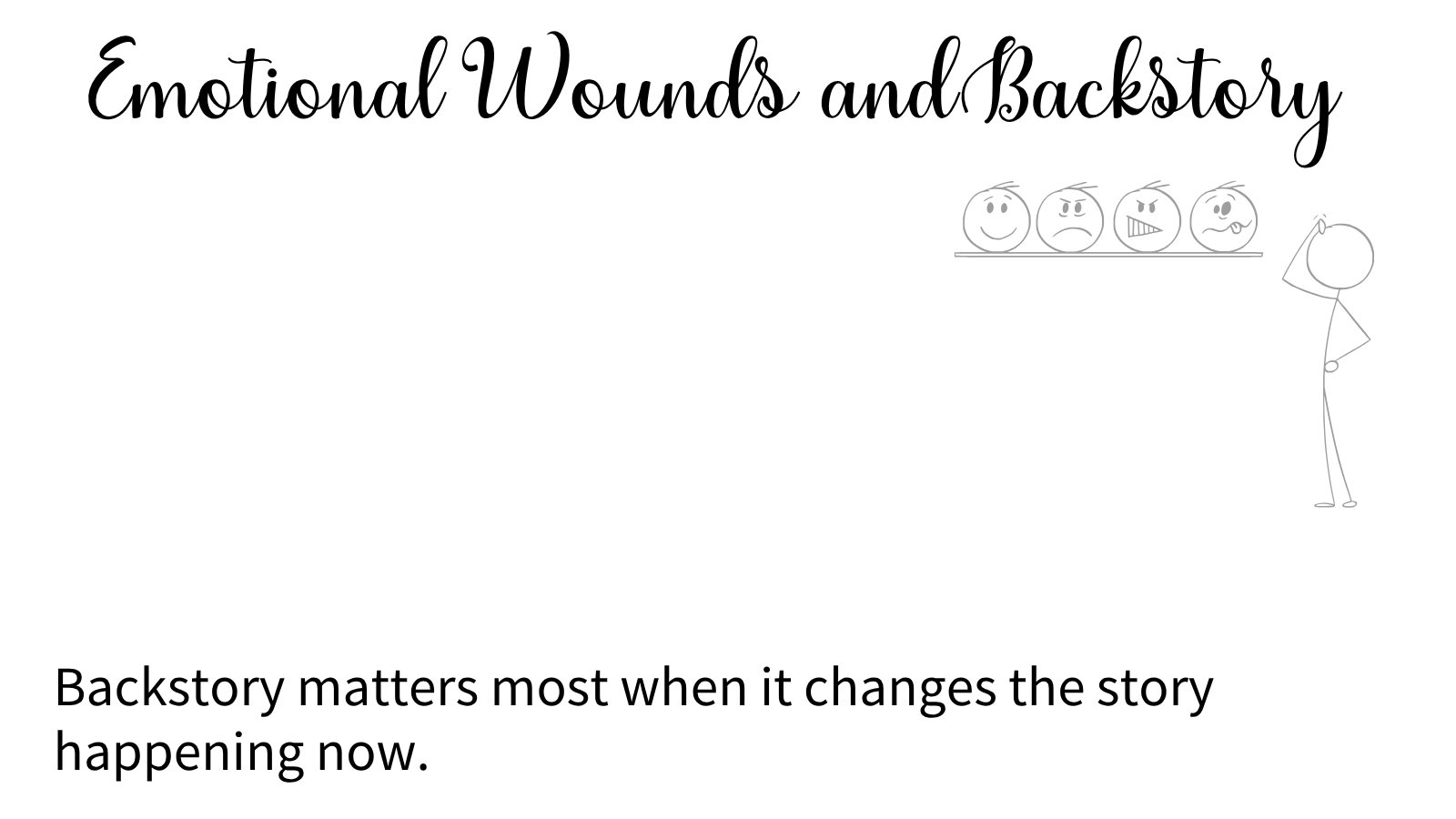
The Wound: What Happened?
Start with the experience that still follows your character.
♥ Was it one major event?
♥ A repeated pattern?
♥ Something small that happened often enough to matter?
Who was involved?
What did your character need that they didn’t get?
♦ Example: When Mara was young, her father often promised to pick her up after school and didn’t show. She’d wait long after everyone else had gone home.
The missed pickups hurt. But so did the lesson underneath them.
She couldn’t count on someone she loved.
You don’t need to invent every painful moment from the character’s childhood. Just enough to understand who they are now.
The False Belief: What Did They Learn?
The false belief is the conclusion your character draws from what happened. You may also hear this called a limiting belief or misbelief.
♦ Example: Mara decides: If I depend on someone, they’ll let me down. Other characters might believe:
I have to earn love by being useful.
If people see my mistakes, they’ll reject me.
My needs cause problems.
If I don’t control everything, someone will get hurt.
The belief should be specific enough to affect choices.
And it’s worth remembering that some fears come from real danger.
Your story doesn’t have to tell a character to trust everyone, but it can show them learning who is safe to trust and why.
The Protection Strategy: How Do They Stay Safe?
Once the character believes something, they usually find a way to protect themselves from it happening again.
♦ Example: Mara handles everything herself. She carries extra supplies. Checks everyone’s work. Avoids asking for help.
That strategy has benefits. She becomes organized, prepared, and resourceful.
It also wears her out and makes it hard for other people to work with her.
That mix is useful.
A coping strategy often helps in one way and causes problems in another.
A character who jokes to avoid serious conversations may also be the person who keeps everyone going during a crisis.
A people-pleaser may be wonderfully attentive to everyone else while ignoring their own needs.
Look for the strength and the cost.
The Visible Flaw: What Do Other People See?
Other characters usually notice the behavior long before they know what caused it.
♦ Example: Mara’s teammates think she’s controlling.
She takes over.
Rejects suggestions.
Treats questions like challenges.
Mara thinks she’s preventing disaster.
That gap is where conflict grows.
Her fear explains why she acts the way she does, but it doesn’t mean everyone around her has to put up with it.
A teammate can understand where she’s coming from and still tell her she’s making things harder.
And be careful with the word flaw. Fear, grief, or a startle response aren’t moral failings.
Focus on the choices that create problems.
♥ Lying.
♥ Lashing out.
♥ Refusing to listen.
♥ Shutting people out.
Those are the parts that affect the stor
The Trigger: What Brings the Wound Back?
A trigger is something in the present that wakes up the old hurt.
♦ Example: One of Mara’s teammates is late for a supply run. Before she hears the reason, Mara decides they’re unreliable. Her reaction is bigger than the current situation. Because she isn’t only reacting to one late person. She’s reacting to years of being left waiting.
You can show that through thought, dialogue, movement, or action.
♥ Maybe Mara checks the time again.
♥ Tightens the straps on her bag.
♥ Leaves without them.
And don’t make every trigger look the same. People react differently depending on the situation, the relationship, and how much they’ve changed.
The Story Challenge: What Must They Face?
Now connect the wound to the plot.
♦ Example: Mara can’t guide the group, move supplies, and carry an injured person by herself. If everyone is going to get out, she has to share responsibility.
That puts pressure on her usual coping strategy. Working harder won’t fix everything this time.
Now the external problem and the internal problem are tied together.
The flood requires teamwork but Mara is afraid to trust people.
That’s the kind of connection you want. And give the character evidence to work with.
If one teammate keeps showing up, keeps small promises, and proves reliable, a later moment of trust will feel earned.

The Growth Moment: What Do They Do Differently?
Growth feels more convincing when the character makes a different choice in a moment that matters.
♦ Example: Near the end, Mara gives a trusted teammate an important task.
She explains what needs to happen.
Then she steps back and lets them do it.
She still worries.
She still wants to check.
But she makes a different choice.
Maybe her belief shifts from: If I depend on someone, they’ll let me down.
To: Some people will disappoint me. I can still choose who I trust.
The wound isn’t gone but it just doesn’t control every decision anymore.
Examples in Action
These examples talk about general character themes without giving away big spoilers.
Jax Teller: Loyalty Pulling Against Change
In Sons of Anarchy, Jax Teller carries the weight of family history and his place in the club. He wants a better future, but the loyalties, expectations, and habits of the world he grew up in keep pulling him back.
From a writing point of view, that gives us an interesting conflict between belonging and change.
How do you build a different life when the people and beliefs that shaped you still have such a strong hold?
That question gives Jax’s choices weight.
The club gives him identity and belonging but it also keeps him tied to a life he says he wants to change.
You can use the same kind of tension with your own characters.
Maybe the family, workplace, community, or cause that gives them comfort is also the thing keeping them stuck.
Shannon Lynch: Safety Through Staying Unseen
In Chloe Walsh’s Binding 13, Shannon Lynch arrives at Tommen College after years of bullying and tries to keep a low profile.
For her, staying unnoticed can feel safer.
That makes attention complicated, even when it comes from someone who means well.
She may want connection and still be afraid of what comes with being seen.
Kindness can feel hopeful and uncomfortable at the same time.
That kind of contradiction is useful because it gives you room for small, believable moments.
♥ A character avoids joining a conversation.
♥ Questions a compliment.
♥ Assumes there’s a catch behind an offer of help.
Those little reactions can tell us a lot before the character ever explains why.
Give Them More Than Their Pain
Your character should be more than their wound.
Give them:
♥ Interests.
♥ Humor.
♥ Preferences.
♥ Values.
♥ Habits.
Things that have nothing to do with the painful thing that happened to them.
♦ Example:
Mara might love terrible action movies.
Grow herbs on her windowsill.
Have very strong opinions about pancakes.
She may be perfectly relaxed with her sister and tense around people in authority.
Those details keep her from feeling like a demonstration of emotional trauma. She starts feeling like a person.
And avoid assuming one experience creates one type of response. Two characters can live through something similar and come away with different fears, strengths, and coping habits.
If you’re writing an experience you don’t know well, do the research. Listen to first-hand accounts.
Give the character room to be more complicated than a single reaction.
Let Change Take Time
One good conversation usually won’t fix everything because growth tends to work better in steps.
♦ Example: Mara might accept help with something small.
Then panic when it goes wrong.
Then admit why she took over.
Then try again later.
Other people can support her.
But they shouldn’t do all the changing for her.
Romance, friendship, and family can give a character reasons to grow.
They don’t have to magically erase years of fear.
And not every arc has to end with perfect healing.
♥ A character may grow.
♥ Refuse to change.
♥ Understand the truth but still struggle to act on it.
The important thing is to choose the ending that fits the story you’re telling.
Questions to Ask
If your character feels flat, try asking:
♥ What happened in their past that still affects their choices?
♥ What did they decide it meant?
♥ What are they afraid will happen again?
♥ How do they protect themselves?
♥ When does that protection help?
♥ When does it make things worse?
♥ What do they want but struggle to accept?
♥ Which relationship challenges their old belief?
♥ What does the plot force them to risk?
♥ What choice could show that they’ve changed, or refused to?
You don’t need to answer all of these before you start writing. Sometimes one or two answers are enough to make the next scene click.
That’s when this kind of character work becomes useful.
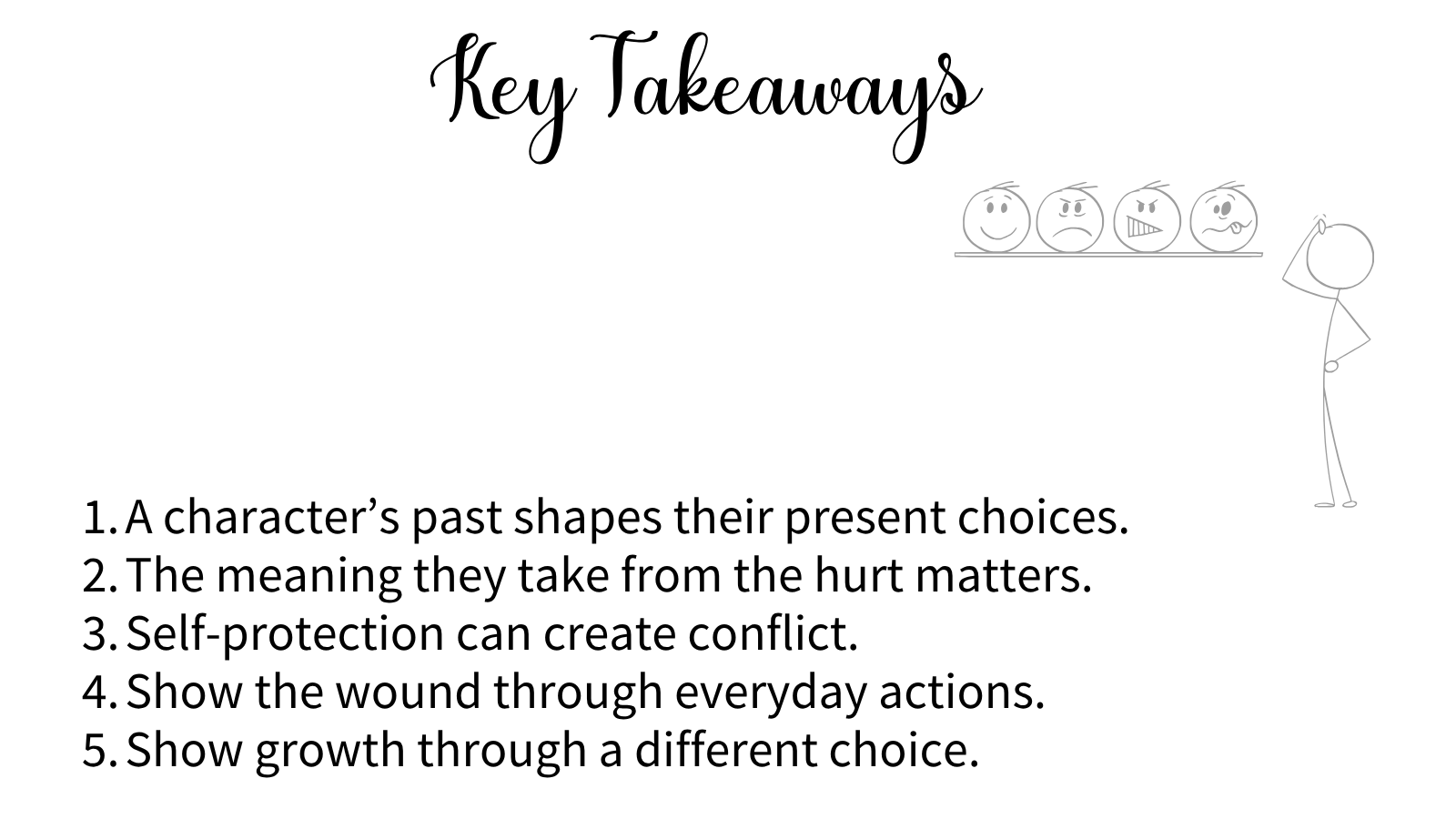
Key Takeaways
1. A character’s past shapes their present choices.
2. The meaning they take from the hurt matters.
3. Self-protection can create conflict.
4. Show the wound through everyday actions.
5. Show growth through a different choice.
Last Words on Writing Emotional Wounds
When you know what still hurts, you can start building fears, habits, conflicts, and choices that all belong to the same person.
And then you can put that person in a story that asks one important question: What are they going to do with the hurt they’re carrying?
If you want to dig a little deeper, Novel Organization: Keeping a Series Bible can help you brainstorm, plan, and strengthen your story twists.
Liked this post? Pin this image! It’s a huge help for my blog. Thank you!
Feature Image from Pixabay
Frequently Asked Questions
1. Does every character need an emotional wound?
No. You do not need to give every character a painful past to make them interesting. Characters can also draw motivation from curiosity, ambition, love, duty, or a strong belief. An emotional wound helps when it adds meaning to their choices and supports the story.
2. What is the difference between an emotional wound and a character flaw?
An emotional wound is a painful experience that still affects the character. A flaw is a trait or pattern of behaviour that causes problems.
For example, a character who experienced betrayal might struggle to trust others. That distrust could lead them to keep secrets or accuse people unfairly. The wound helps explain the behaviour, but it does not excuse the harm they cause.
3. Can a character have more than one emotional wound?
Yes. A character might carry hurt from several experiences, and those experiences can reinforce each other. Childhood rejection and a later betrayal might both feed the belief that they cannot trust anyone.
For a clear character arc, choose one main wound or belief that connects closely to the central conflict. Let other experiences add depth without giving every hurt its own storyline.
4. How do I reveal an emotional wound without dumping backstory?
Show how the wound affects the character before you explain its source. Use their choices, thoughts, dialogue, and habits.
A character might brush off a compliment, refuse a small favour, or assume a friend’s cancelled plans mean rejection. Later, a brief memory or conversation can help readers understand why. Share the past when it adds meaning to the present scene.
5. How can I connect an emotional wound to the plot?
Give your character a goal that challenges their usual way of protecting themselves.
For example, a character who fears betrayal might need to trust a partner to solve a mystery. They want to find the truth, but withholding information makes the investigation harder. This connects their inner struggle to the action and gives their choices real consequences.
6. Does a character need to heal by the end of the story?
No. Your character might make progress, resist change, or recognize a harmful pattern without knowing how to break it yet.
If you want a hopeful arc, show one meaningful choice that differs from their earlier behaviour. They might ask for help instead of struggling alone or speak honestly instead of hiding. Growth can feel satisfying even when the character still has work to do.


0 Comments