

Have you ever felt stuck in the middle of your story?
Maybe your beginning feels slow.
Maybe your middle feels messy.
Maybe your ending feels rushed.
It might help to use a three-act structure. It provides a clear roadmap for your story, so you always know what’s coming. Let’s make this simple and helpful

A three-act structure divides a story into three main sections.
Act 1 Setup: You meet the main character(s), get introduced to their world and learn what their life looks like (goals, conflict, obstacles). Then something changes.
Act 2 Confrontation: The character tries to solve the problem, but it gets harder and harder. Obstacles and problems keep staying in the way.
Act 3 Resolution: The character makes a final push. We see the story’s climax, then its resolution (success or failure).
When you use this structure, it helps with:
♥ pacing (the story moves at a good speed)
♥ stakes (problems feel important)
♥ character growth (the character changes realistically)
This is quite normal. We’ll discuss each act, but think of this as a suggestion, not a rule book.

Related Reading: Naming Fictional Characters: Without Overthinking
A Story Is Really About Change
Events don’t simply happen to someone in most stories. Stories typically depict a person’s change over time, a person who starts one way… and ends another way.
♥ A shy person learns courage.
♥ A selfish person learns how to care.
♥ A person who wants control learns to trust.
The plot makes that change happen.
Dramatic Question
As the story goes on, a major dramatic question usually appears. For example:
♥ Is the hero going to succeed?
♥ Will the detective solve the mystery?
♥ Will the cops catch the criminals?
♥ Is the villain going to murder the hero?
♥ Will they get the guy/girl?
The story’s climax usually reveals the answer to this question. Now let’s look at each act.
Act 1: Setup
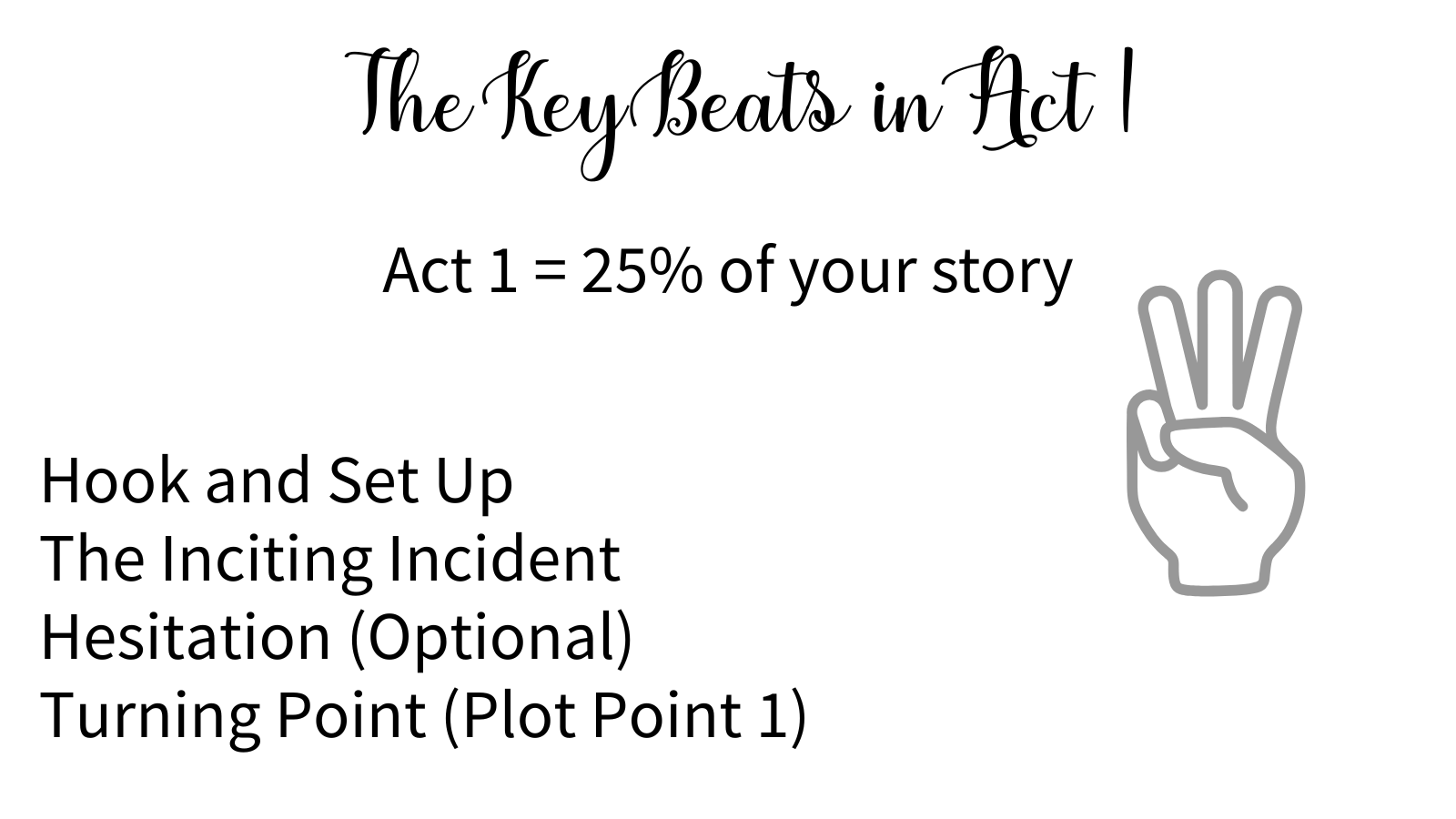
Act 1, which makes up about 25% of your story, is where the story begins. The reader sees:
♥ Who the main character is and their relationships
♥ What they want (even if they won’t admit it yet)
♥ What their normal life looks like
♥ What their relationships look like
♥ What the story problem is going to be
It also helps the reader care because we understand what the character might lose.
The Key Beats in Act 1
Hook and Set Up
Your story’s hook grabs the reader’s attention from the very beginning. A good hook doesn’t rely on explosions or action. The reader needs a reason to wonder, “Wait … what happens now?”
The tone, setting, central conflict, and daily life of the character get revealed in your first scene. This scene does not need to be dramatic … just clear.
The Inciting Incident
This moment kicks off the primary story, and things get interesting. Something happens, which causes a new challenge, opportunity, or danger.
Examples:
♦ A stranger arrives with bad news
♦ A letter shows up
♦ Someone goes missing
♦ The character gets fired
♦ The monster appears
♦ A rule changes
♦ An old debt comes due
♦ Addiction resurfaces
Whatever changes is something a character cannot ignore forever.
Hesitation (Optional)
Hesitation is a common trait in most characters because it’s human. They might think:
♥ I can’t do this.
♥ This is not my problem.
♥ I’ll deal with it later.
This is fine as long as they don’t stay stuck too long.
Turning Point (Plot Point 1)
Crossing the threshold is another name for the turning point. At this moment, the character commits. They either make a choice, or they’re forced into something. This will change things for them permanently. This is the end of Act 1.
♥ Will Priya recover the diamond?
♥ Will Faith win their love interest?
♥ Will Zane capture the killer?
Common Act 1 Mistakes
♥ Too much backstory. Readers want the story first.
♥ Starting too early. Start close to the change.
♥ No clear want. Your character should want something, even if it’s small.
Act 2: Confrontation
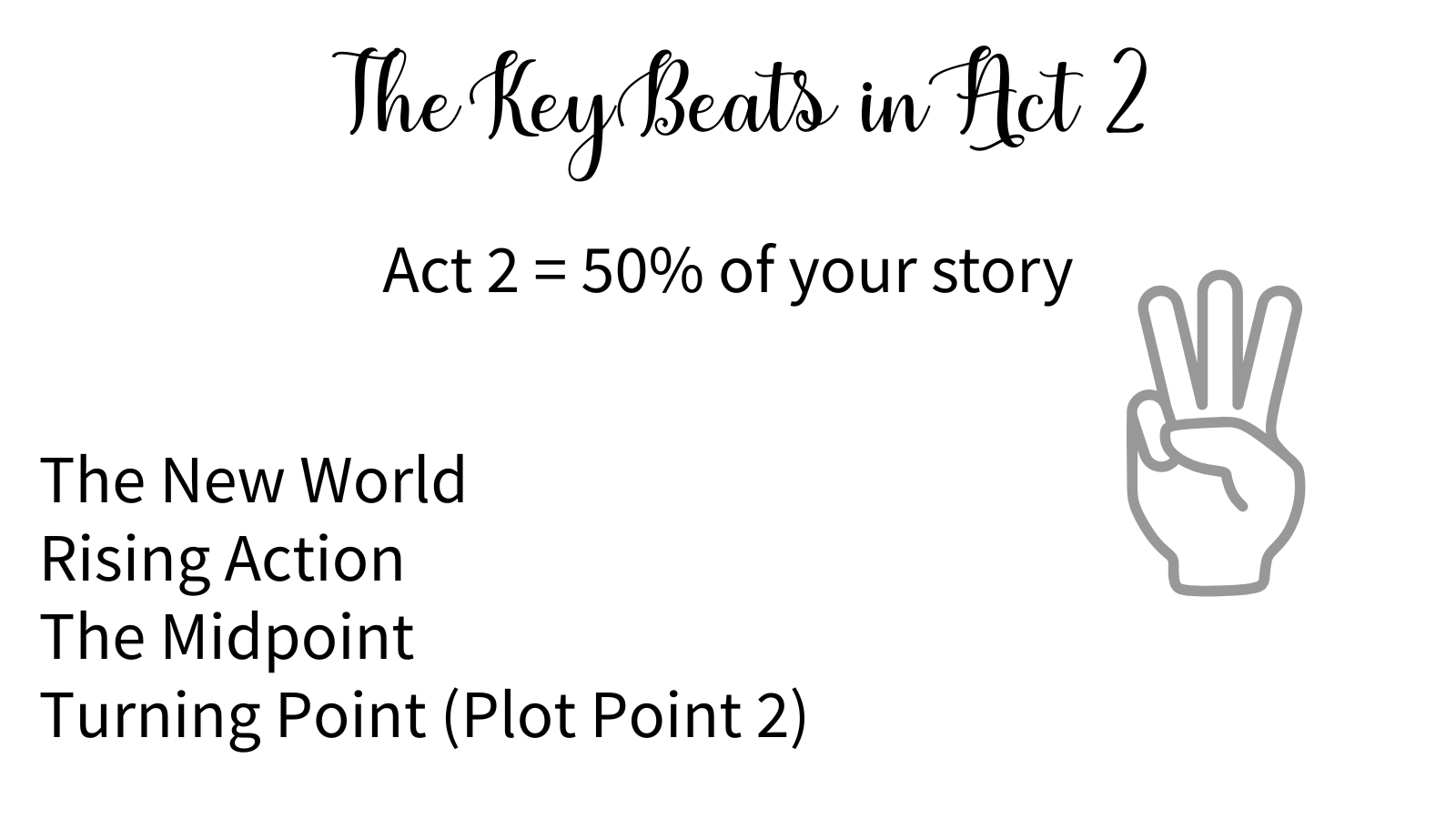
Confrontation, also known as rising action is your story’s Act 2, the longest, takes up about half (50%) of the story. This is where the character tries to fix the problem, reach the goal, or survive the situation. The character here faces challenges, falls short, grows, and transforms.
But the story pushes back.
♥ obstacles grow
♥ consequences get worse
♥ choices become harder
This is where your story becomes exciting. Things are getting complicated, relationships are strained, and the story’s about to explode, leading to a big finish that wraps things up.
Don’t forget that the story can have highs, lows, and changes, not just a straight path.
The Key Beats in Act 2
The New World
After Act 1, life looks different. This could be:
♥ a new place (a school, a city, a planet)
♥ a new role (spy, chosen one, leader, new job)
♥ a new problem (war, curse, competition)
Adaptation is the only path for the character.
Rising Action
This represents the core of Act 2. Protagonists struggle because they lack the skills to handle their antagonists. To handle their situation, they must learn new skills and/or become more self-aware, which changes them.
The character:
♥ tries a plan
♥ hits a problem
♥ tries again
♥ faces a bigger problem
♥ loses something
♥ learns something
To keep Act 2 strong, each scene should change something:
♥ the character gains new info
♥ the danger increases
♥ a relationship shifts
♥ a plan fails in a new way
It usually involves help from mentors and co-protagonists.
The Midpoint
The midpoint occurs roughly at the story’s centre. There is a big transformation, similar to one of these:
A big win that creates a bigger problem: They succeed… but now the enemy notices them.
A big loss that raises the stakes: They fail… and now the cost is higher.
After the midpoint, things usually feel more serious. Now the character has less time, fewer options, and more risk. This part often includes:
♥ betrayals
♥ new threats
♥ mistakes catching up
♥ hard choices
Turning Point (Plot Point 2)
This is the moment right before Act 3. Usually, it makes things worse and forces tough calls, which ups the tension.
It often feels like:
♥ the worst moment
♥ the biggest setback
♥ the darkest point
♥ a shocking reveal
The character might think they’re doomed. But this moment calls for a final plan.
Common Act 2 Mistakes
The muddy middle
Fix: Give the character a clear goal for Act 2.
Repeating scenes
Fix: Change the outcome each time. Raise the cost.
No escalation
Fix: Make problems harder and consequences bigger as you go.
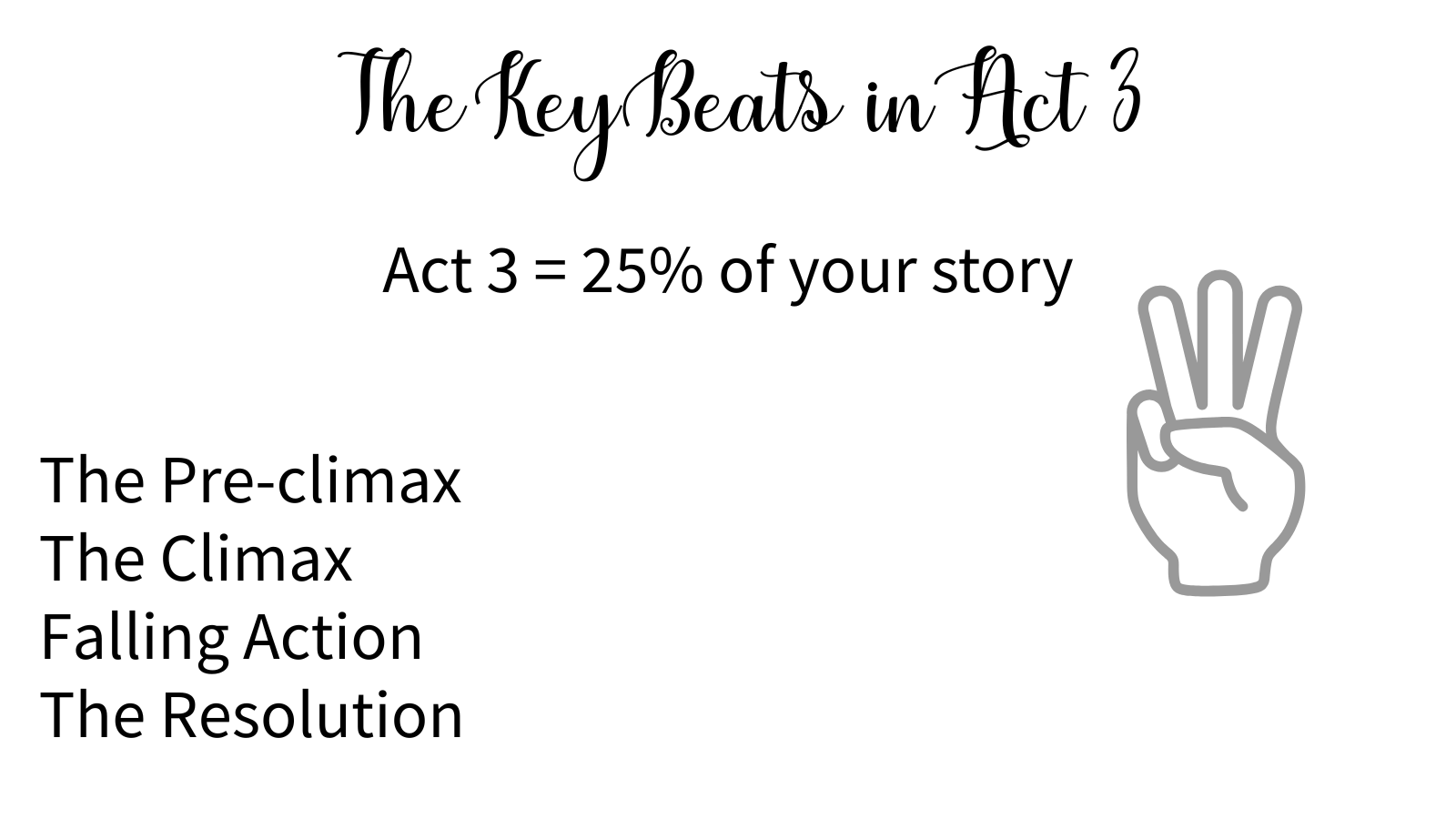
Act 3: Resolution
The third act concludes the story and its side stories; it’s your story’s final 25%. It’s the final push, where everything you set up pays off. Act 3 shows:
♥ the final plan
♥ the biggest conflict moment
♥ the result of the character’s choices
♥ the ending that feels earned
Things get superheated, the big question gets answered, and everyone figures out who they are.
Related Reading: Transition Words 101
The Key Beats in Act 3
The Pre-climax
The is also known as the final plan or The Dark Night of the Soul. The character decides about their next moves using their Act 2 knowledge. Their actions are braver, more competent, honest, and stronger.
Things are really heating up, and the pressure’s on as the stories converge as the characters make their final preparations.
The Climax
The climax is the biggest moment in the story. It’s the end conflict where the character faces:
♥ the main enemy
♥ the main fear
♥ the main choice
A good climax usually includes an actual cost:
♥ they lose something
♥ they risk something
♥ they change in an authentic way
Falling Action
After the climax, we see the immediate result. The danger ends. The dust settles. People react. Emotions run free.
The Resolution
This is the new normal. We now see what life is like, and the story concludes with a distinct emotional impact.
♥ relief
♥ hope
♥ sadness
♥ victory
♥ bittersweet change
Common Act 3 Mistakes
A rushed ending
Fix: Leave space for the aftermath.
A random solution
Fix: Make the ending grow from earlier choices.
Too many loose threads
Fix: Tie off the important ones. Keep minor ones simple.
Example Star Wars: Episode IV
Let’s look at an example. Spoiler warning: this gives away major plot turns and endings.
Act 1 Setup (Tatooine + the call to adventure)
♥ Hook: A rebel ship gets attacked. Leia hides the stolen Death Star plans inside R2-D2 and sends him away.
♥ Exposition/Setup: We meet Luke Skywalker in the exposition. We learn about the Empire, Rebels, and the Force.
♥ Inciting incident: Luke finds Leia’s message inside R2-D2 and meets Obi-Wan.
♥ Turning Point / Plot Point 1 (end of Act 1): Luke set off with Obi-Wan, Han Solo and Chewbacca to rescue Leia, headed into danger.
Act 2 Confrontation (rescues + losses + escape)
♥ Rising action: They learn Alderaan is gone and the Death Star captures them.
♥ Midpoint shift: Now they must escape and save Leia. (This flips the story from “deliver plans” to “survive + rescue.”) They rescue Leia, fight through the Death Star, and get out. They Also discover the Death Star’s vulnerability.
♥ Plot Point 2 (end of Act 2): Obi-Wan dies during the escape. The Rebel Alliance discovers that the Death Star is on its way to destroy their base.
Act 3 Resolution (final battle + win)
♥ The Final Plan: As the Death Star advances, the Rebels examine the plans and coordinate their assault.
♥ Climax: The trench run. Luke uses the Force to make the last shot. The Death Star explodes.
♥ Resolution: The heroes get medals and a clear win. And there is renewed hope for the galaxy.
A Quick Mini-Template You Can Copy
Here’s a simple way to outline your story using three acts:
Act 1: A character who wants ________ faces ________. They commit when ________.
Act 2: They try to ________ but ________. At the midpoint ________. Things get worse when ________. They hit bottom when ________.
Act 3: They decide to ________. In the climax they ________. In the end ________.
You can write rough answers first. Clean them up later.

Perfect for Plotters and Pantsers
The three-act structure works great for both plotters and pantsers because it can be as detailed or as loose as you need.
If you love plotting, it gives you clear “checkpoints” to plan around (setup, rising problems, and a strong ending) so you can map your scenes and pace your twists.
If you write by the seat of your pants, it still helps because it doesn’t lock you into a strict outline. It acts more like a simple guide that keeps your story moving:
♥ Act 1 helps you start with a change
♥ Act 2 helps you keep the pressure rising
♥ Act 3 helps you land a satisfying finish.
You can discover your story as you go, then use the three acts to check if things make sense and to fix any slow spots.
How to Use This When You Feel Stuck
If your story feels off, ask yourself these questions:
If Act 1 feels slow…
♥ What is the inciting incident?
♥ Does it happen early enough?
♥ Do we know what the main character wants within the first few pages?
♥ Is the inciting incident a genuine change, or is it just background information?
♥ Are you showing the tone and genre promise early (romance, danger, mystery, etc.)?
If Act 2 drags…
♥ What is the character’s goal right now?
♥ Do the stakes rise as the story moves forward?
♥ Are your scenes different from each other, or do they repeat the same beat?
♥ Do problems get harder each time (more risk, more cost, less time)?
♥ Is there a midpoint shift that changes the plan, the stakes, or the truth?
♥ Does the character make active choices, or do things only happen to them?
If Act 3 feels weak…
What choice proves the character changed?
♥ Are you wrapping up the core problem of the story?
♥ Does the climax feel earned?
♥ Is your climax tied to the character’s biggest fear or flaw?
♥ Does the character win (or lose) because of a choice they make?
♥ Is the solution earned by earlier setup (not random help or luck)?
♥ Do you give the reader a clear emotional landing after the climax?
Last Words on the Three Act Plot Structure
The three-act structure is not a cage. It’s a map. You can still write a creative, unique story. This structure just helps you organize the big pieces.
Happy writing!
Linda

Liked this post? Pin this image! It’s a huge help for my blog. Thank you!
Feature Image by Leopictures from Pixabay


0 Comments